
Precision Behind Every Weld: How MIG Welding Wire Feeder Technology is Shaping Modern Manufacturing
Apr 09,2026

In today’s fast-evolving metal fabrication industry, the MIG welding wire feeder has quietly become one of the most critical components in achieving consistent, high-quality welds. While often overlooked compared to power sources or torches, the wire feeder plays a decisive role in ensuring stable arc performance, precise material delivery, and overall production efficiency.
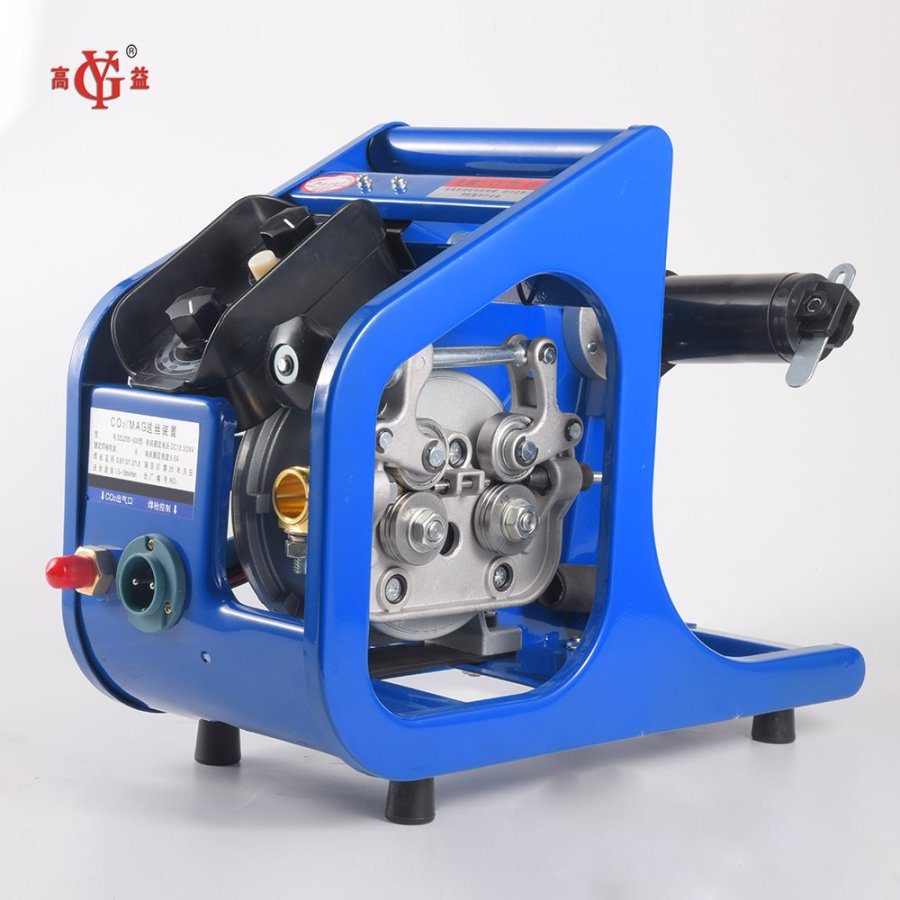
At its core, a MIG welding wire feeder is responsible for supplying welding wire at a controlled and consistent speed. This seemingly simple function directly affects weld quality—irregular feeding can lead to spatter, weak joints, and production delays. As industry experts note, stable wire feeding improves arc stability, enhances productivity, and reduces welding defects.

What sets modern solutions apart is the continuous innovation happening behind the scenes. For example, advanced systems such as dual-drive mechanisms have been developed to ensure smoother and more accurate wire feeding. By using two synchronized drive units, these systems reduce slippage and maintain steady delivery even in demanding industrial conditions.
This level of precision is not achieved by design alone—it reflects the manufacturing philosophy of the factory behind the product. Companies like Gaoyi Welding Equipment have spent decades refining their production processes, combining standardized quality systems with hands-on engineering expertise. Established in 1973 and operating under certified quality management systems, the company integrates R&D, material selection, assembly, and testing into a controlled workflow to ensure product reliability.
Inside such facilities, every MIG welding wire feeder goes through multiple stages—from component machining and motor calibration to final performance testing. Attention is given to details like drive roll accuracy, feed speed control, and compatibility with different wire types. The goal is not just to manufacture a component, but to deliver a dependable tool that performs consistently in real-world applications.
Beyond the product itself, service and flexibility are becoming key differentiators. Manufacturers increasingly offer customization options to meet specific industry needs, whether for automotive production lines, heavy fabrication, or precision engineering. This customer-oriented approach ensures that each MIG welding wire feeder is not only technically sound but also aligned with the user’s workflow.
Ultimately, the evolution of the MIG welding wire feeder reflects a broader shift in manufacturing—from basic functionality to precision-driven performance. For businesses seeking to improve welding efficiency and product quality, understanding the value behind this component is essential.
For more detailed specifications, customization options, or technical support, readers are encouraged to explore the product further and connect directly with the manufacturer to discover solutions tailored to their specific needs.
Related Posts
Precision Behind Every Weld: How MIG Welding Wire Feeder Technology is Shaping Modern Manufacturing